 Journal Archive
"The level of violence that the police face these days is very high. You see them with those bloody big guns on their hips and think: 'I wish you didn't have to wear it', but we live in a changing world."
Newsman's Respect for Police
By Brett Williams
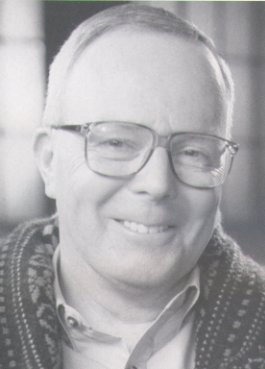
Veteran Channel Nine newsreader, Kevin Crease, has no doubt that police have society's toughest and most stressful job. He sees their work as both dangerous and thankless, and doesn't envy them "one tiny bit".
"The level of violence that the police face these days is very high," he says. "You see them with those bloody big guns on their hips and think: 'I wish you didn't have to wear it', but we live in a changing world.
"I've got great respect for them. To keep some sense of balance and lead a normal life with what they see so often must be terribly difficult."
Ironically, Crease himself seriously considered joining the police force as a 16 year-old. But later, as a young newspaper reporter assigned to gruesome murders and fatal car accidents, he thought: "I'm damn glad I didn't".
Crease, 61, has covered stories involving police ever since his days as a copy boy with The News in the early '50s. From his vast experience, he understands why some police may develop a siege mentality - of the "us-versus-them" kind.
By 1960, Crease was working in what was then the infancy of television news. And he recalls how the relationship of those days between police and the news media wasn't always "smooth and harmonious".
"The journalists didn't know what they really were trying to do," he says. 'We thought a television news service should be something like the old American television show, 77 Sunset Strip, and the police didn't know quite how to handle us - it used to get very rocky.
"In those early days, any journalist could find himself or herself on a police story. That journalist could be totally inexperienced and just blunder in, and cause all sorts of trouble for themselves and put people at risk.
"But we've come round 180 degrees. You've got Crime Stoppers now, where the police are very well aware of the challenges that television journalists have. And, television journalists are well aware of the problems confronting police in their investigations.
"(But) there's always going to be an element of tension: we want to find out what the police know - that's our job. There are certain things they don't want us to know - that's their job."
Not for years, however, has Crease heard gibes against police among his fellow journalists. From his point of view, current relations between the worlds of law enforcement and news media are "very good".
And the police department's Media Liaison section, Crease believes, has helped bring about those good relations. He says that, by mixing in both worlds, those who staff the section are clearly able to foster respect and understanding between the two.
But Crease welcomes comment from the Police Association whenever it feels its members may have fallen victim to unfair or inaccurate reporting. "There's no point in us saying: 'We don't want to talk to you', and there have been times when police have come in here (to Channel Nine)," he says.
Both the gathering and presentation of television news has changed enormously over the past five years, Crease says. He describes news services as "much softer" and says that the practice of journalists jumping into cars and chasing police to crime scenes is "just not done any more".
Crease insists that journalists must report facts as they see them, but also "try to be fair". He says that some reporters may have been inclined to "go soft on the police" during their 1991 pay dispute so as not to lose favour.
"That, I think, would be a very stupid line to take, and I don't think it happened," he says. "I know there was ill-feeling some of the time, but that will always happen. I think we covered it (the dispute) fairly."
Today, Crease is encouraged by what he sees as mutual respect between police and the media whose aims, he says, are the same in most cases. "It might sound like a cliche," he warns, "but for the good of society, we need each other."[End]